Wednesday, 7 October 2015

Hair loss

Propecia (Finasteride)


Propecia is indicated for the treatment of male pattern hair loss on the vertex and the anterior mid-scalp area.


Propecia is used for treating certain types of male pattern hair loss (androgenic alopecia) in men. Propecia is a steroid reductase inhibitor. It works by reducing the amount of the hormone dihydrotestosterone (DHT) in the body. This may block certain types of hair loss in men.


http://safemedicinesonline.com/en/propecia-finasteride.html


How should I take Propecia?

Take Propecia exactly as prescribed by your doctor. Do not take it in larger amounts or for longer than recommended. Follow the directions on your prescription label.

Take this medicine with a full glass of water.

Propecia can be taken with or without food. Take the medicine at the same time each day.

It is important to use Propecia regularly to get the most benefit. You may need to take Propecia daily for three months or more before you see a benefit. Propecia can only work over the long term if you continue taking it. If the drug has not worked for you in twelve months, further treatment is unlikely to be of benefit. If you stop taking Propecia, you will likely lose the hair you have gained within 12 months of stopping treatment. You should discuss this with your doctor.

Store Propecia at room temperature away from moisture, heat, and light. Keep the bottle tightly closed when not in use.
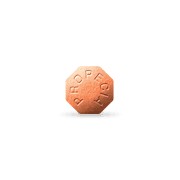


finasteride for hair loss


What happens if I miss a dose?

Take the missed dose as soon as you remember. Skip the missed dose if it is almost time for your next scheduled dose. Do not take extra medicine to make up the missed dose.

What happens if I overdose?

Seek emergency medical attention. An overdose of Propecia is not expected to produce life-threatening symptoms.

What should I avoid while taking Propecia?

Avoid getting up too fast from a sitting or lying position, or you may feel dizzy. Get up slowly and steady yourself to prevent a fall.

General information:

If you have any questions about Propecia, please talk with your doctor, pharmacist, or other health care provider.


Propecia (Finasteride) is to be used only by the patient for whom it is prescribed. Do not share it with other people.

If your symptoms do not improve or if they become worse, check with your doctor.
Check with your pharmacist about how to dispose of unused medicine.

Tuesday, 6 October 2015

Generic Calan (Verapamil)

Calan is a calcium channel blocker, it is effective in treatment of hypertension, stenocardia, etc.

Common use
 
Calan is used to treat hypertension, hypertensive crisis, primary pulmonary hypertension, stenocardia, supraventricular tachicardia, sinus tachycardia, atrial tachyarrhythmia, atrial flutter, atrial arrhythmia.

Dosage and direction
 
Patients with stenocardia or supraventricular tachicardia should take Calan three times a day, those with arterial hypertension taken it twice a day. Dosage depends on the disease, age and should be individually administered depending on severeness of the condition. Consult your doctor before to take the medication.

Missed dose
 
If you missed a dose take it as soon as you remember, but not if it is almost time of the next intake by your schedule. If so skip the missed dose. Do not try to compensate a missed dose by taking an extra one.

Overdose

 
If you suspect that you took too much of Calan and feel slow heartbeat and fainting seek for immediate medical attention.

Storage
 
The medication should be stored at room temperature 15-30 C (59-86 F) in a light- resistant box.

Disclaimer
 
We provide only general information about medications which does not cover all directions, possible drug integrations, or precautions. Information at the site cannot be used for self-treatment and self-diagnosis. Any specific instructions for a particular patient should be agreed with your health care adviser or doctor in charge of the case. We disclaim reliability of this information and mistakes it could contain. We are not responsible for any direct, indirect, special or other indirect damage as a result of any use of the information on this site and also for consequences of self-treatment.

More Details: Generic levitra online, Cheapest cialis online, Safe medicines, Cialis tablet price, Order finasteride online.

Thursday, 1 October 2015

What is Impotence (Erectile Dysfunction)?

Introduction

Coitus is the process of physical union of male and female genitalia accompanied by rhythmic movements. It is also referred to as the sexual intercourse. Coitus is part of the sexual life of a human being and essential for begetting a child. The process of coitus mandates that the male sex organ, penis undergoes a phase of erection. This phase of penile erection makes the penis hard and long and enables it to penetrate the female genital organ to deliver the sperms for fertilization.

Thus, penile erection is a normal natural event that occurs in a male as part of his reproductive life. The length of an erect penis of a healthy individual is normally between 4.5 to 7 inches. There are occasions and conditions where an individual is not able to have a penile erection. This inability to have an erect penis for coitus is termed as impotence.

Thus, impotence can be scientifically referred to as erectile dysfunction. Erectile dysfunction can be defined as an individual’s inability to have an erection of the penis for normal sexual functions. Physically, an erection results in a hardened and elongated penis. Physiologically, an erection occurs in response to a neurological stimulus that results in blood flow into specialized sponge like structures in the penis.

Causes

There are numerous factors that cause erectile dysfunction. These factors can be classified as Physical, Physiological and Psychological causes. Physical causes include physical injury to the penis or underlying structures and chronic inflammation of the underlying tissues due to infections. Physiological causes include circulatory defects, alteration of the voltage controlled potassium channel, cardiovascular complications, diabetes, neurological complications, hormonal deficiencies and side effects of certain prescription drugs.

Psychological causes play a significant role in impotence because of the fact that sexual behaviour is essentially an instinctive behaviour. Instinctive behaviour is essentially a neurological pattern brought about by the close interactions of the nervous system of the male and female. Thus, any sexual arousal in a male needs a strong stimulation form the female. The female organs of breast, vagina, buttocks, hip, arm pits, neck and lips are capable of producing a strong sexual stimulation and subsequent arousal. Thus, any disruption or absence of a strong stimulation can cause impotence.

Impotence can also occur in the absence of a favourable sexual environment that demands privacy, happiness and normal health. Erection is often disturbed by factors that enhance neurological inhibitions. Psychological causes also include depression, anxiety and sexual trauma that deter this neurological process.

Treatment

PDE5 inhibitor drugs like Viagra form the first line treatment options for impotence. Prostaglandins tablet insertions in the urethra and penile injections are the next options. Recently, penile prosthesis has gained popularity. A penile prosthesis is a medical device implanted in the penis by surgery.

Penis pump, a cylinder device fitted over the penis to create a partial vacuum around the penis to draw blood into the penis has been successful. Vascular reconstructive surgery is another surgical option. It is important to distinguish penile erection and penile enlargement, which is purely a male enhancement procedure.